One Key Credit Card
Increasing long-term card usage through content strategy
The Opportunity
Most credit card experiences focus on acquisition.
The challenge for One Key begins after approval.
Customers understand the introductory offer, but many stop engaging once those rewards have been earned.
Existing messaging did little to reinforce the ongoing value of the One Key Card or encourage it to become part of customers' everyday travel behaviour.
Rather than creating another promotional campaign, I wanted to explore how content strategy could help build long-term engagement by surfacing the value of the card throughout the customer journey.
My role
Senior Content Designer & Content Strategist
I led the content strategy for this initiative, analysing the existing customer journey, defining a messaging framework and identifying opportunities to reinforce the value of the One Key Card beyond acquisition.
My responsibilities included:
analysing the existing customer journey
identifying communication gaps
defining a behavioural messaging strategy
creating a reusable messaging framework
prioritising opportunities across the experience
developing supporting concepts and recommendations
The challenge
The problem wasn't awareness. It was habit.
Most messaging focused on encouraging applications.
Very little reminded existing cardholders why they should continue using the card after
the introductory reward had been earned.
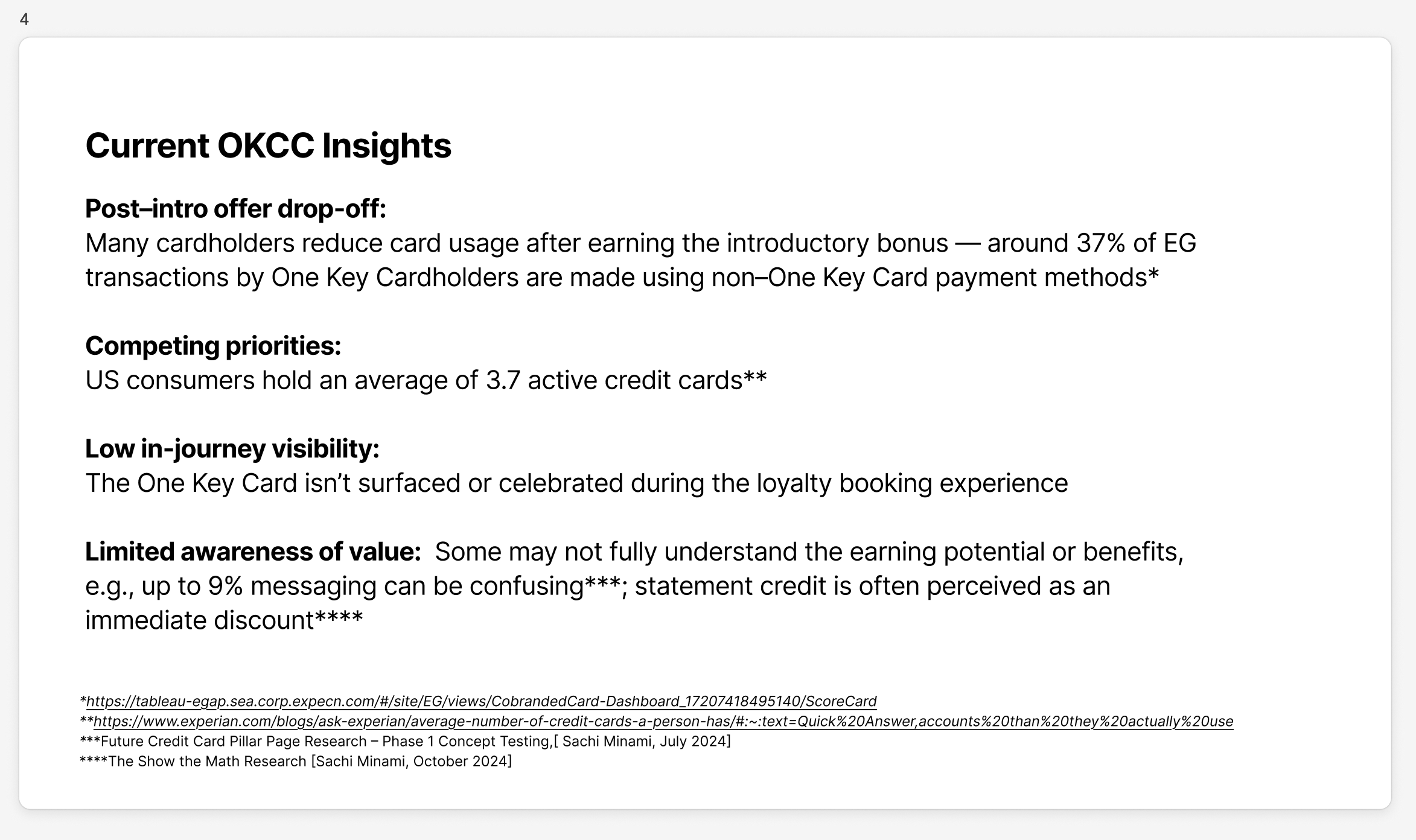
I identified an opportunity to shift the role of content from promoting the card to reinforcing its ongoing value throughout the customer journey.
Approach
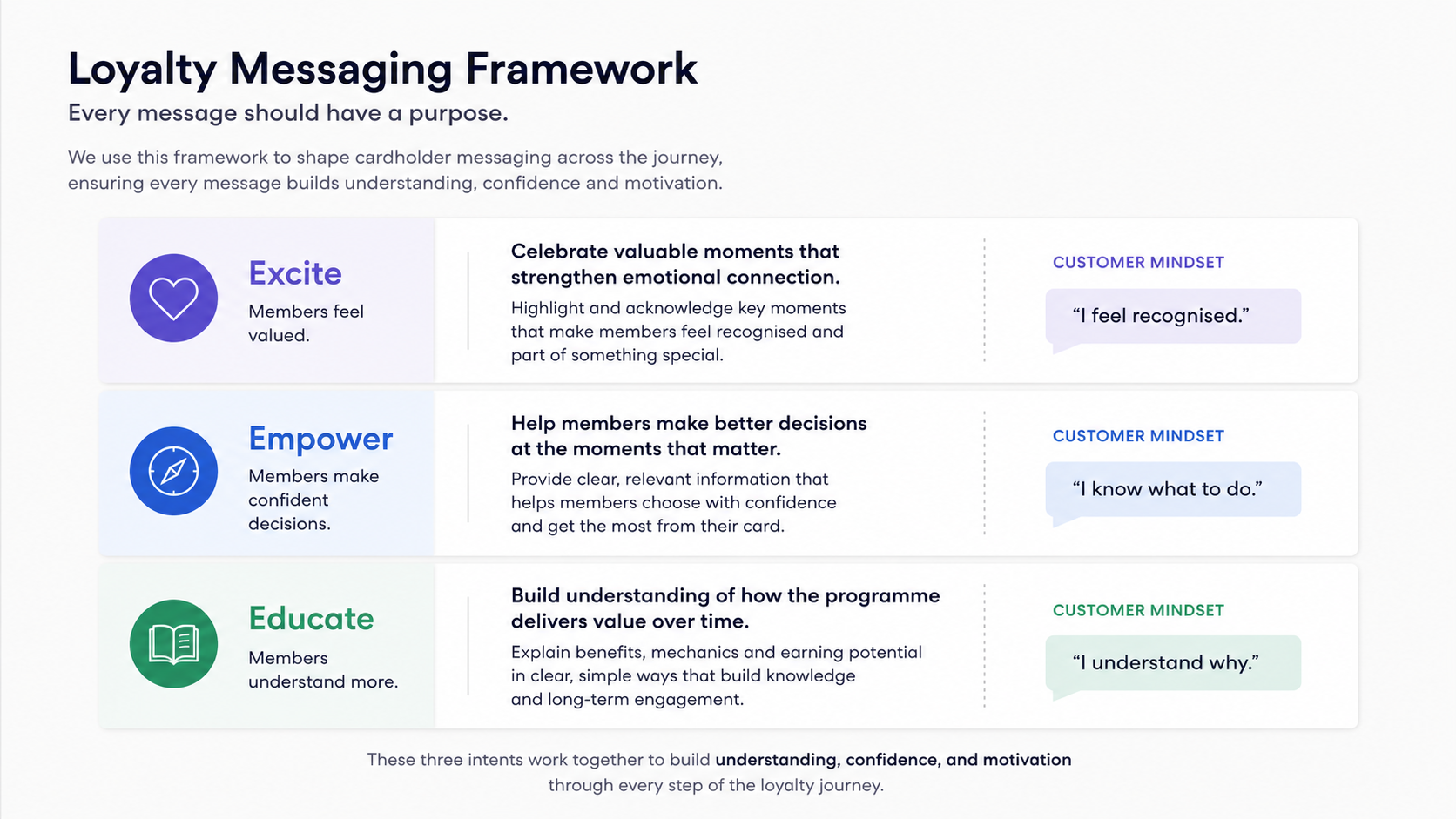
I developed a behavioural messaging framework built around three complementary roles for content.
01
EXCITE
Strengthen the emotional connection at valuable moments as they use the product.
02
EMPOWER
Help travelers make better decisions in moments that matter.
03
EDUCATE
Build understanding of the card’s ongoing value to the traveler.
Designing a scalable strategy
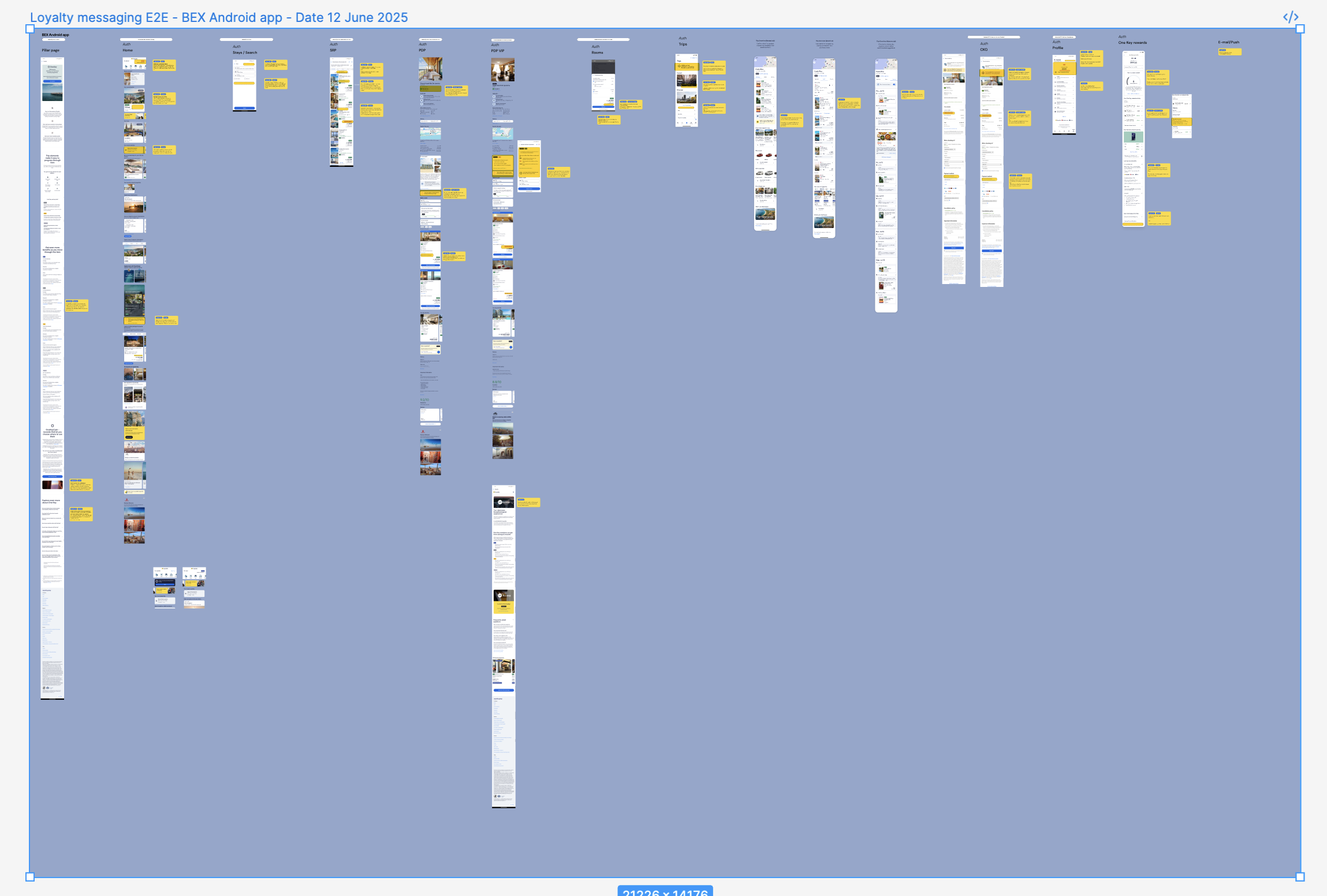
Once the messaging framework had been established, I audited the customer journey to identify where it could be applied.
Rather than proposing entirely new experiences, I prioritised existing touch points where cardholder messaging could naturally complement existing loyalty communications.
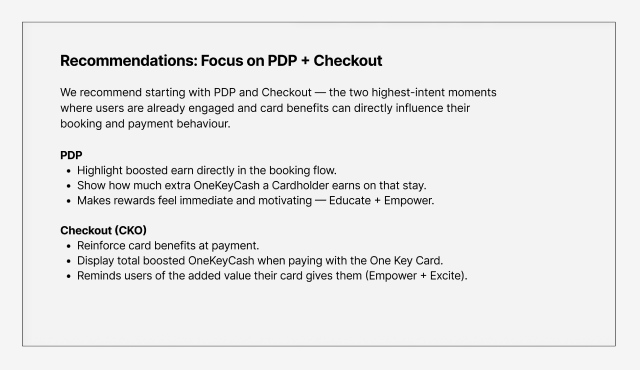
Recommendations were organised into three phases:
Phase 1 — Existing surfaces where messaging could be introduced quickly.
Phase 2 — High-value opportunities across additional product surfaces.
Phase 3 — A longer-term vision for creating a consistent cardholder communication programme.
This approach balanced strategic ambition with realistic delivery constraints.
Example concepts
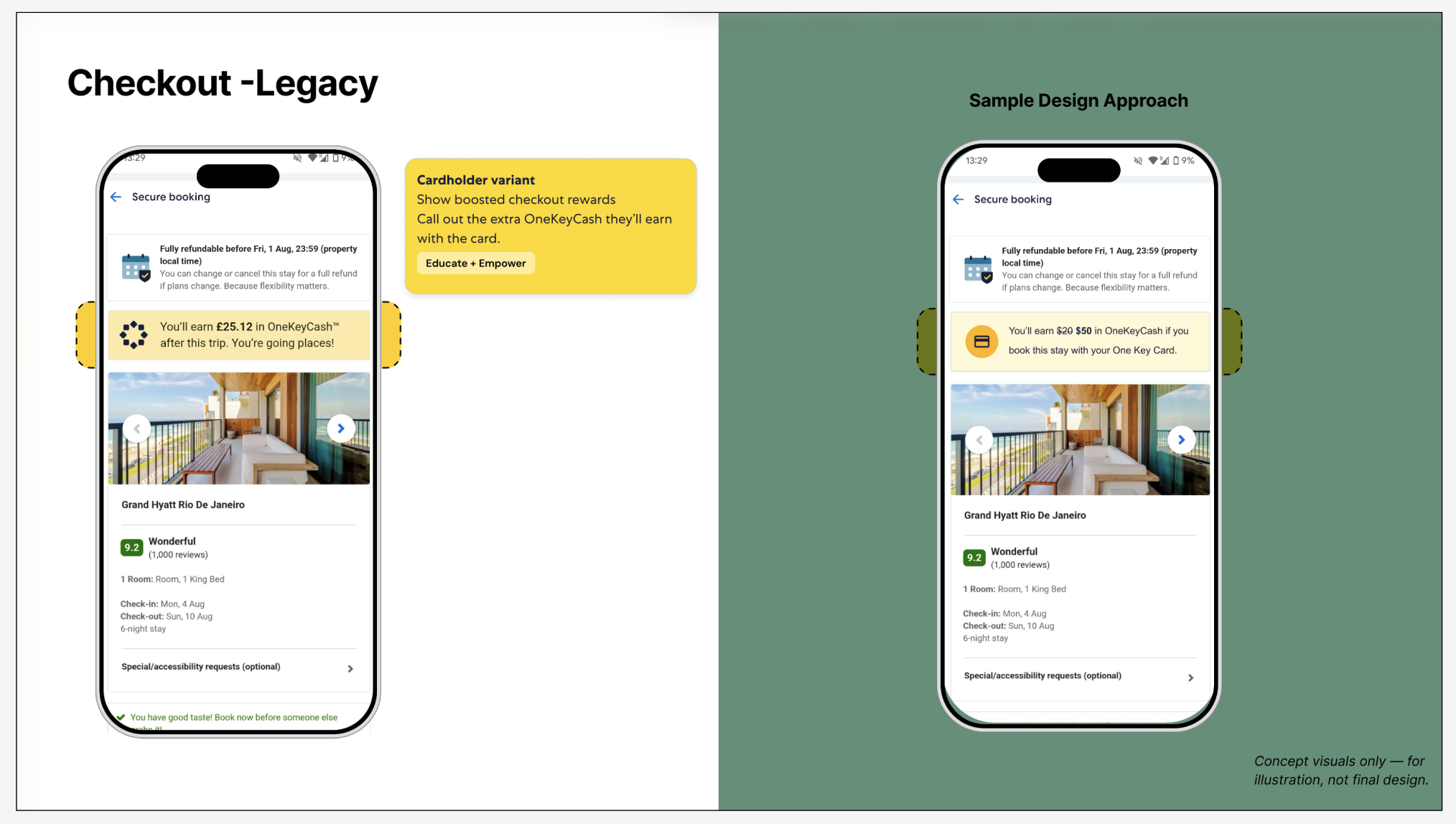
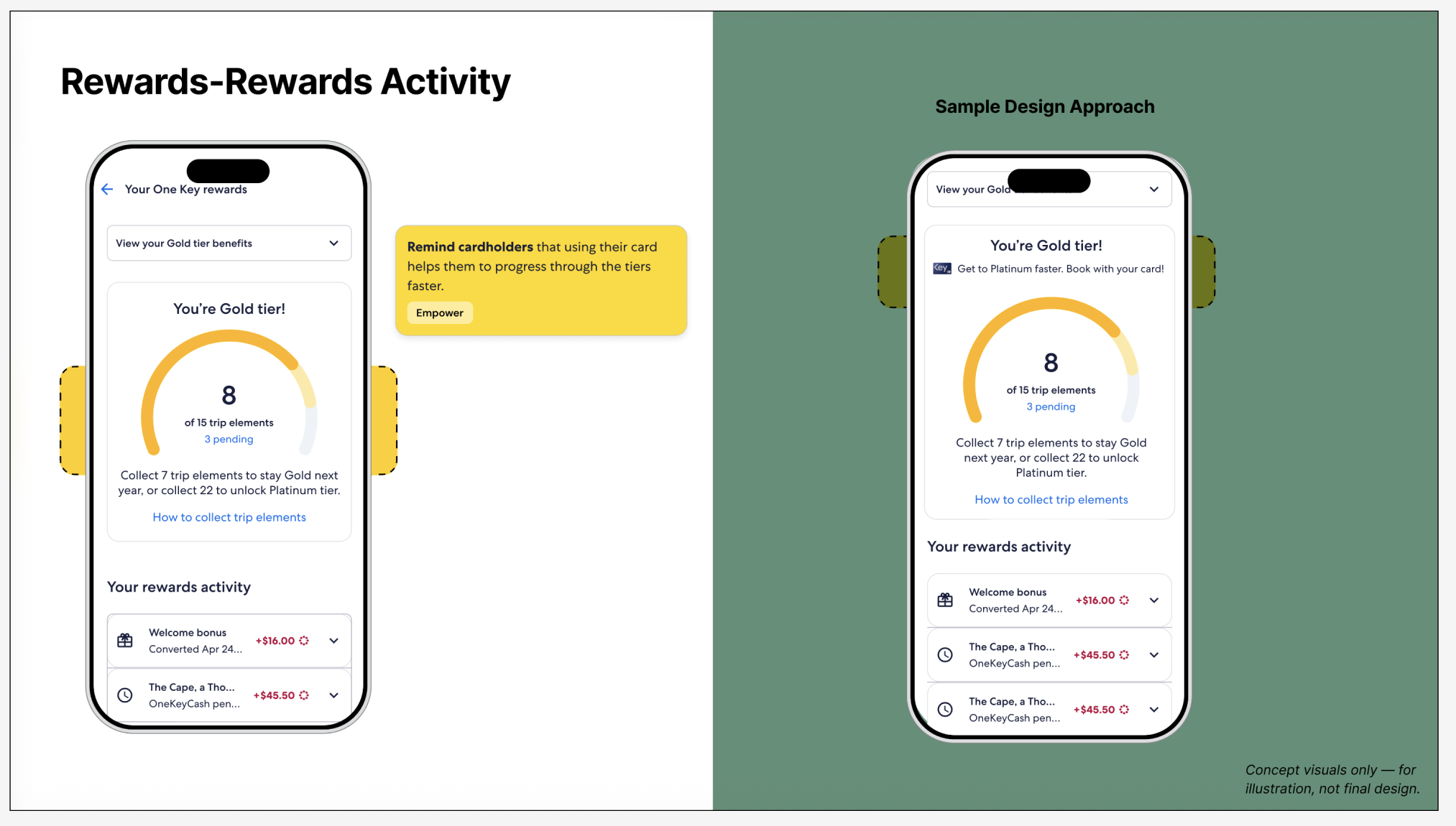
To demonstrate how the strategy could work in practice, I worked with product designers to develop concept designs showing how cardholder messaging could integrate into existing experiences without increasing complexity.
The concepts weren't intended as final UI.
They were communication prototypes that illustrated how the framework could influence real product experiences.
The Outcome
The work reframed the problem from card acquisition to long-term cardholder engagement.
The resulting framework gave Product and Design a reusable way to identify opportunities and develop messaging across the cardholder journey.