Sage Copilot
Increasing Sage Copilot adoption through contextual in-product guidance
The Opportunity
Accountants were increasingly curious about AI, but many still didn't know when—or whether—they should trust it in their day-to-day work.
Sage Copilot had the potential to save our customers hours of manual work, but its success depended on more than powerful technology. The challenge was helping accountants understand when AI could genuinely help them.
Rather than asking customers to discover and learn another product, we needed to introduce Copilot naturally within the workflows they already trusted — making AI feel more like a helpful colleague than another feature.
My Role
Role: Content Design Lead
Duration: 8 months
Team: Product • UX Design • UX Research • Engineering • Product Marketing
I led the content strategy for Sage Copilot activation and adoption.
My responsibilities included:
Defining the in-product messaging strategy
Designing onboarding and activation journeys
Creating contextual guidance throughout the product
Developing messaging patterns for AI adoption
Collaborating with researchers to refine content through testing
Approach
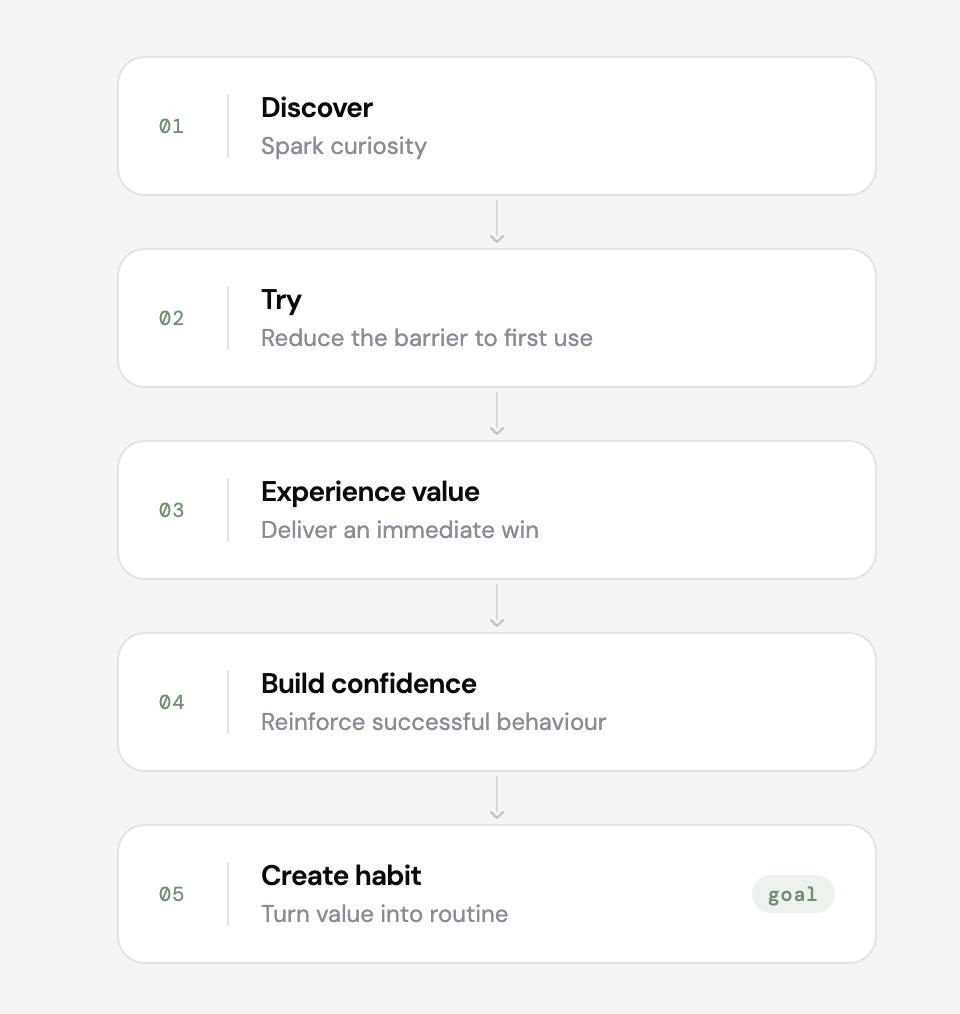
Rather than treating onboarding as a single event, I designed a content strategy that helped customers build confidence with the AI tool over time.
The strategy defined how we wanted adoption to build over time. Three principles guided how we translated that into the customer experience.
1. Meet customers where they already work
Introduce Copilot at moments where it can genuinely help rather than interrupting existing workflows.
2. Show value before asking for commitment
Help customers experience immediate benefits instead of explaining AI capabilities in
abstract terms.
3. Reinforce the customer’s wins
The most persuasive messages should come after customers experience value, not before.
Designing the Experience
Introducing AI without interrupting work
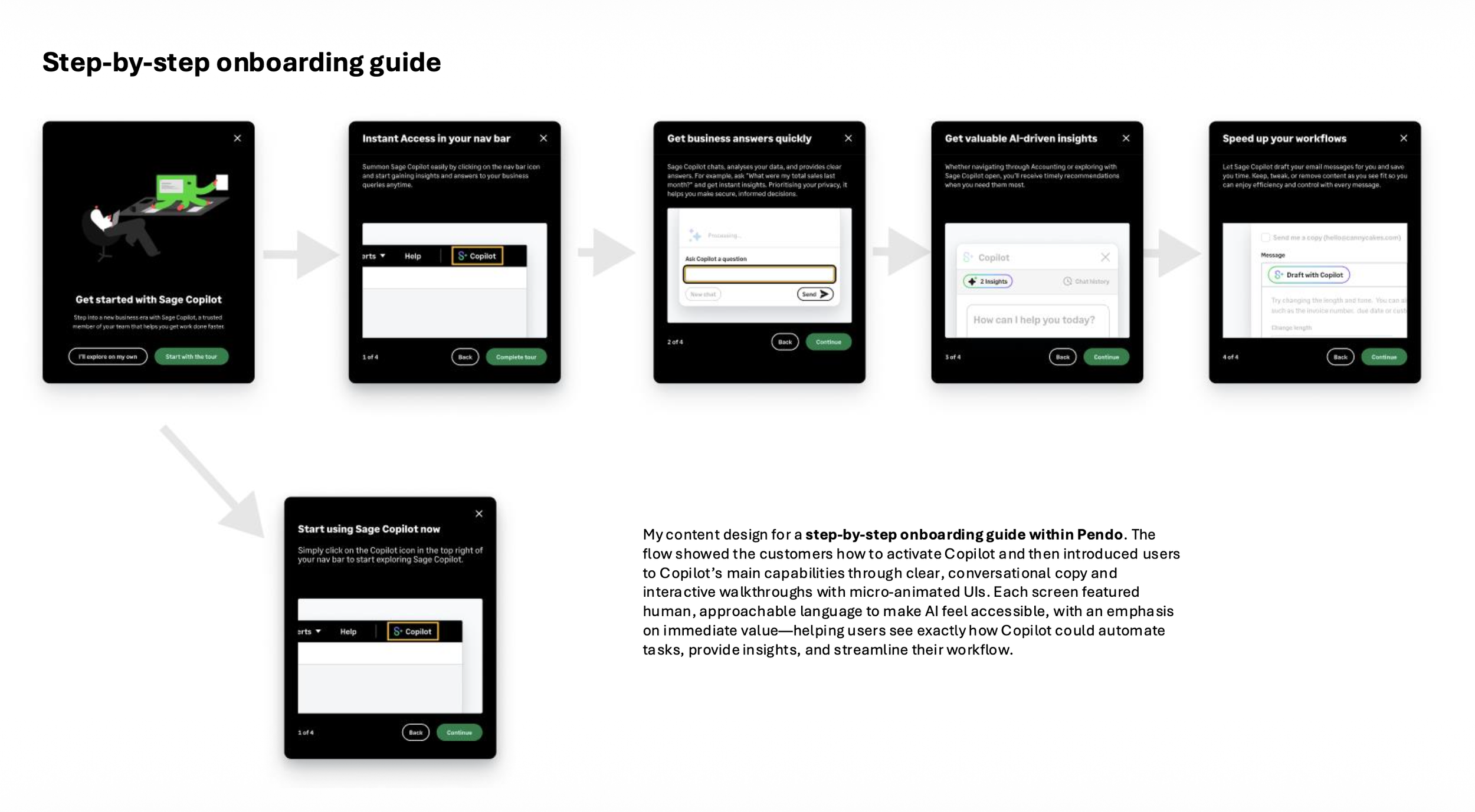
The onboarding experience focused less on explaining AI and more on helping customers accomplish today's task more easily.
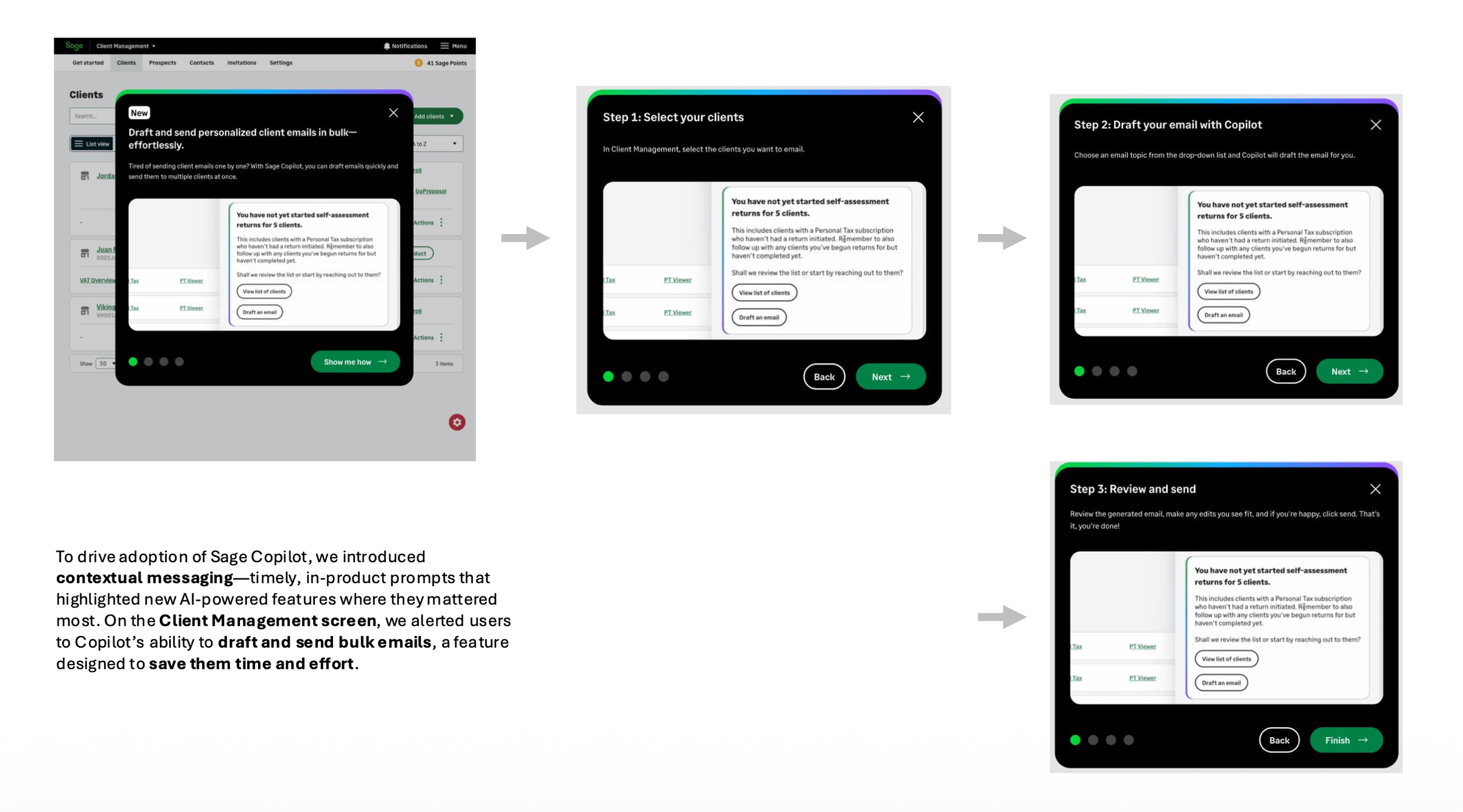
Rather than overwhelming users with features, the walkthrough introduced Copilot through short, conversational guidance and interactive product tours.
The goal wasn't to teach AI. It was to help customers complete meaningful work with AI.
Making guidance contextual
For example:
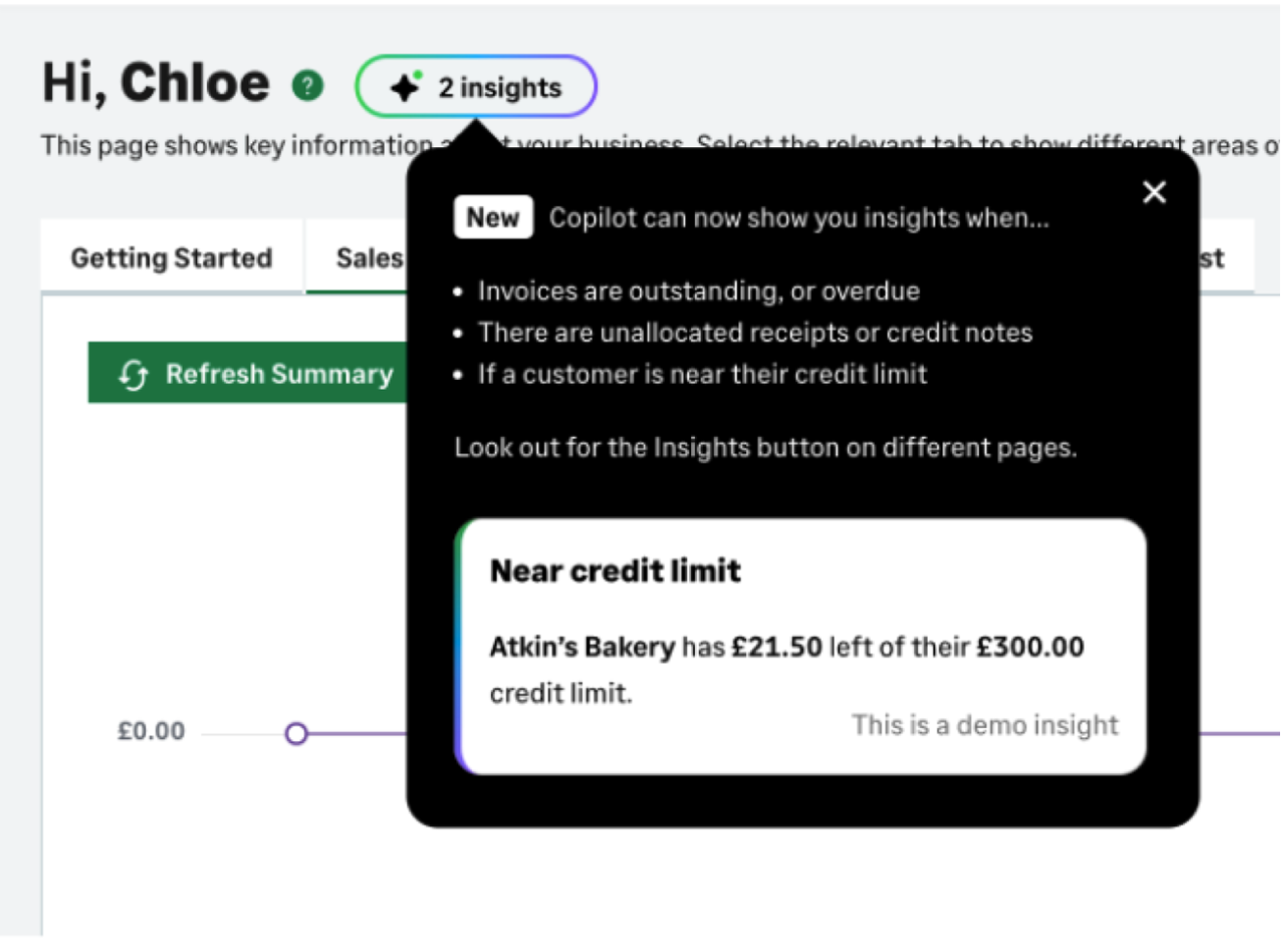
Instead of promoting Copilot throughout the product, we surfaced guidance where it was immediately relevant.
while managing clients, users discovered AI-generated bulk emails
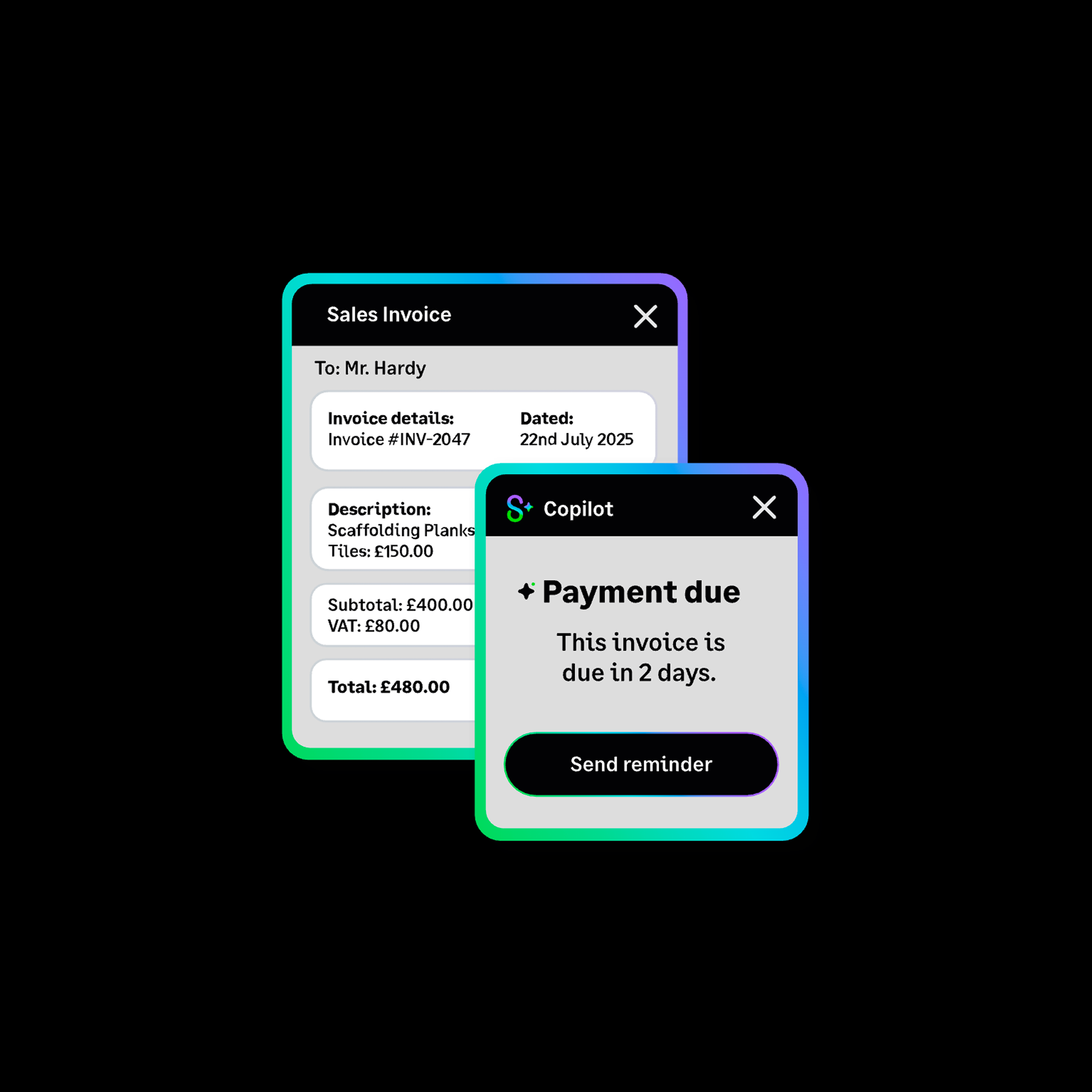
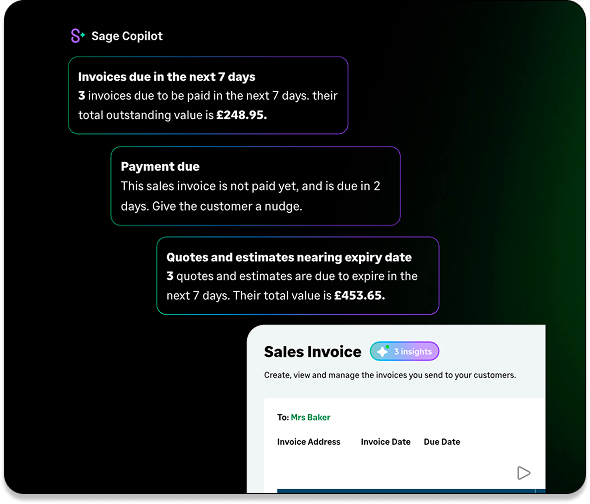
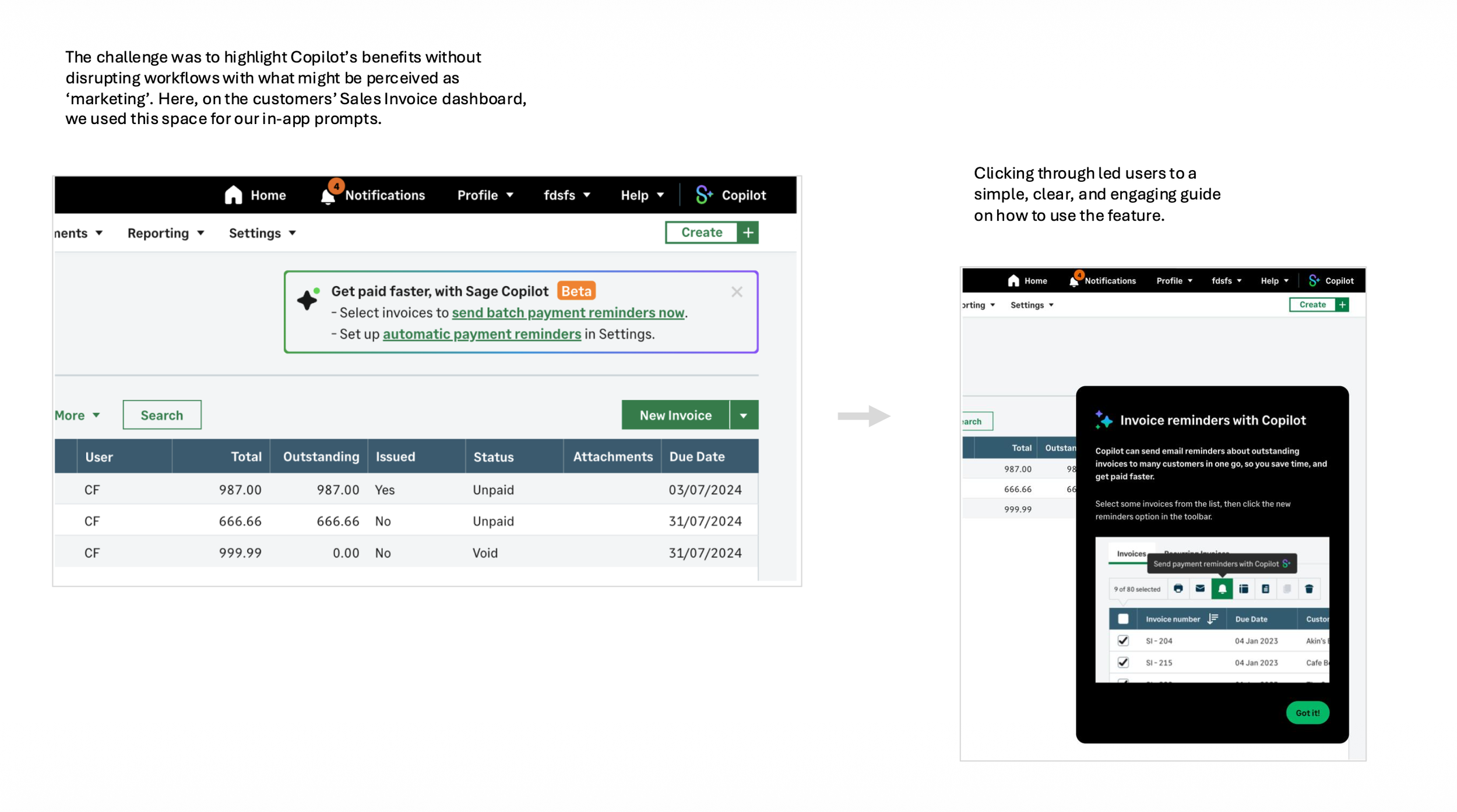
while creating invoices, they discovered automated payment reminders
after completing repetitive tasks manually, Copilot suggested faster alternatives
Every message appeared in response to user behaviour rather than according to a predefined marketing campaign.
Reinforcing success
One of the biggest opportunities wasn't introducing AI.
It was helping customers recognise the value they'd already received.
Instead of saying:
"Copilot saves time."
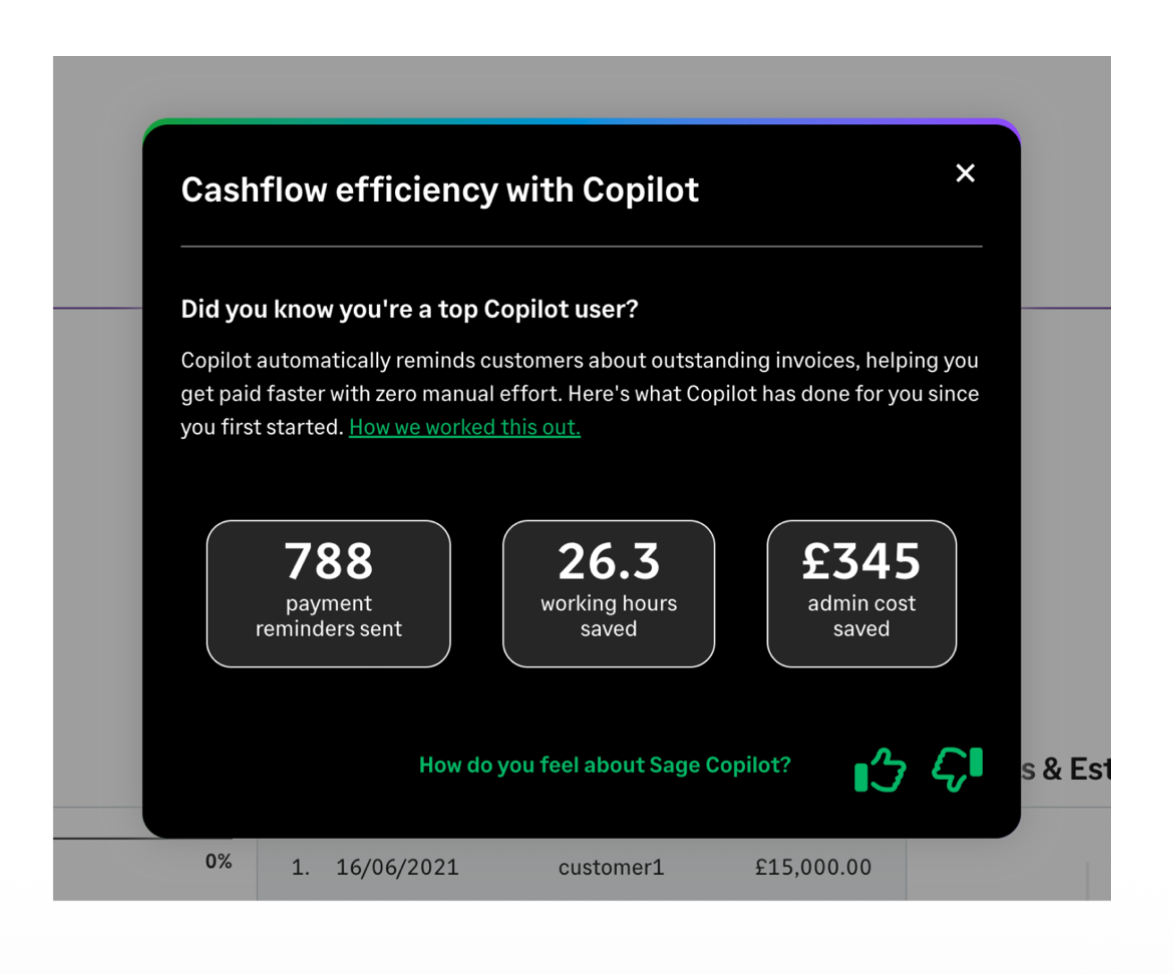
We created product notifications that could say:
"You've already saved hours using Copilot."
That subtle shift transformed the messaging from product promotion into positive reinforcement.
Rather than repeatedly encouraging customers to try AI, the experience encouraged them to continue using it.
Impact
This content strategy helped shift Copilot from a feature customers had heard about into one they actively used and then paid for.
Results included:
30,000+ regular activations within six months
Increased engagement with Copilot workflows
Reduced friction around AI adoption
More customers discovering AI through existing workflows rather than standalone onboarding
Messaging refined through continuous testing and research
What would I go back and change?
If I were working on this experience today, I'd move beyond predefined onboarding journeys towards more adaptive guidance based on customer behaviour.
Rather than showing every customer the same sequence, I'd explore experiences that respond dynamically to how people actually work.
For example, customers who regularly chase overdue invoices could receive payment automation guidance earlier, while finance managers reviewing reports might discover forecasting capabilities first.
I'd also explore how AI itself could personalise onboarding, helping customers discover the capabilities most relevant to them.
That said, I'd approach this carefully in a financial product. Adaptive experiences must remain transparent, predictable and explainable. When customers trust software with financial decisions, consistency is just as important as personalisation.
The challenge isn't simply making AI feel smarter. It's making it feel trustworthy.